

 ΔΕΙΤΕ ΠΡΩΤΟΙ ΟΛΑ ΤΑ ΝΕΑ ΤΟΥ TRIBUNE ΣΤΟ GOOGLE NEWS
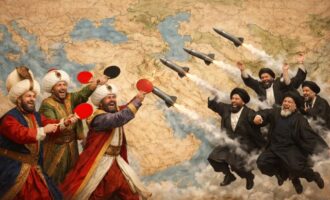
Serious questions are being raised regarding the nature of Iranian missile strikes on Turkish soil, as assessments grow of a pre-arranged -and thus staged- operation between Ankara and Tehran. Despite the fact that the missiles are real and the launches genuine, the methodology of the strikes suggests an orchestrated provocation aimed at creating a false impression of Turkey being targeted.
According to this view, Ankara seeks to appear as a “victim” of Iranian aggression in order to pretextually reaffirm its role as a Western bulwark in the region. Behind this facade of confrontation, however, lies a deep strategic alignment with the Iranian regime, with the two countries coordinating their moves to serve mutual interests (for instance, Turkish tankers continue to sail unhindered through the Straits of Hormuz).
Indicative of the strikes’ true intent is the fact that the missiles land in Kurdish regions, serving as a tool of pressure against the Kurds of Turkey. For Ankara, the persistent fear of a “New Treaty of Sèvres” and the perceived threat to its national independence constitute the driving force behind such reckless provocations.
This tactic is not unprecedented for the Erdogan government, which has been accused in the past of similar “false flag” operations, allegedly exploiting ISIS attacks to legitimize domestic crackdowns and foreign military interventions.
To experienced Middle East observers, Ankara’s attempt to present itself as a “target” of Iranian aggression is laughable, if not pathetic.
It is noteworthy that while Gulf Arab nations are facing a barrage of hundreds of missiles and drones, Turkey -in an almost “magical” fashion- records only three incidents. These occurred with a suspicious delay, only after the international community began questioning the provocative immunity Erdogan appeared to enjoy from the Mullahs.
This numerical disparity is not merely a statistical paradox; it borders on the ridiculous. It requires extreme naivety to believe that Tehran is “warring” against Ankara with three missiles, while simultaneously unleashing entire arsenals against its other neighbors.
Evidently, Turkey and Iran brutally underestimate Western intelligence, assuming that such crude “Oriental” theatrics can pass for actual conflict while their underlying strategic alignment remains undisturbed. Consequently, an intense diplomatic and military dialogue is unfolding behind the scenes regarding the nature of these strikes, with estimates suggesting they are the product of a pre-arranged provocation.
The Sèvres Syndrome and Ankara’s Cunning Strategy
The Turkish leadership appears possessed by a persistent existential fear over the last decade, assessing that following the destabilization of Iran, Turkey will be the next target of a broader regional realignment. At the heart of this concern lies the revival of the Treaty of Sèvres, with Ankara fearing a new attempt to partition the country or curtail its influence.
Targeting Kurdish Regions
It is remarkable that the Iranian missiles land in areas of southern Turkey with a heavy Kurdish presence. In essence, Iran is firing missiles into Turkish-occupied Northern Kurdistan.
A History of Provocations
Suspicion is bolstered by the track record of the Erdogan administration, which has been repeatedly accused of orchestrating “false flag” operations. Past incidents come to mind where Ankara allegedly exploited purported ISIS attacks to justify military incursions and consolidate its domestic and foreign agenda.
Turkey and Iran seem to view Westerners as gullible dupes or outright fools, assuming they will “swallow whole” such Eastern machinations. However, neither the Greeks nor the Israelis are convinced by such childish “theater,” staged by cunning, small-minded, and sanctimonious Asian theocrats.